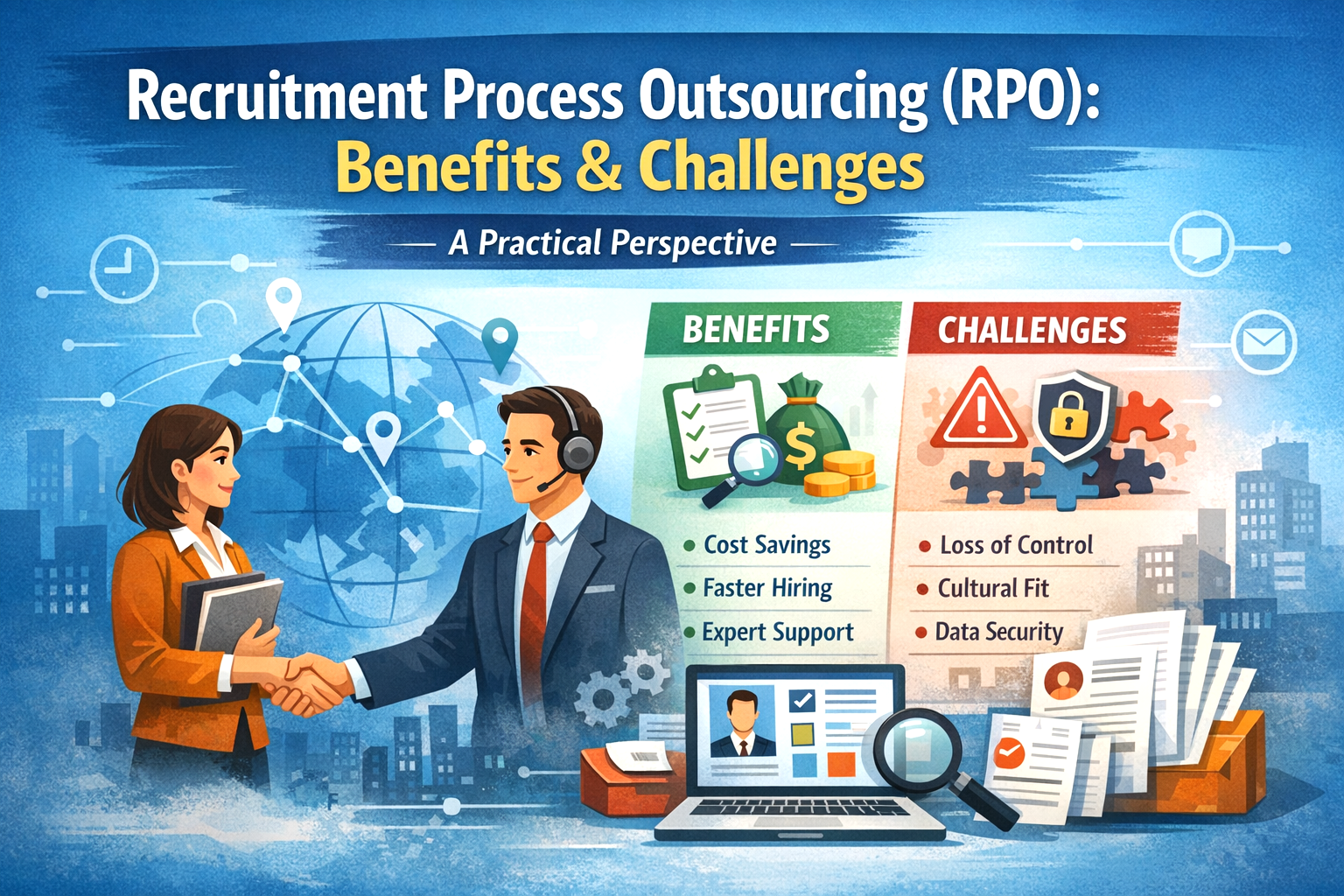
Recruitment has become one of the most critical functions in modern organizations. As companies compete for skilled talent, hiring quickly and efficiently can determine business success. However, many organizations struggle with high recruitment costs, limited HR resources, and lengthy hiring cycles.
This is where Recruitment Process Outsourcing (RPO) comes into play.
Recruitment Process Outsourcing is a strategic hiring model where an organization transfers all or part of its recruitment process to an external service provider. Instead of handling recruitment internally, companies partner with specialized recruitment firms that manage sourcing, screening, interviewing, and onboarding candidates.
In today’s fast-paced business environment, RPO has become a popular solution for companies aiming to improve hiring efficiency while focusing on their core business operations.
What is Recruitment Process Outsourcing (RPO)?
Recruitment Process Outsourcing refers to the practice of delegating recruitment functions to an external provider who acts as an extension of the company’s HR department.
Unlike traditional recruitment agencies that focus mainly on filling vacancies, RPO providers manage the entire recruitment lifecycle, including:
- Workforce planning
- Job posting and employer branding
- Candidate sourcing
- Screening and assessments
- Interview coordination
- Offer management
- Onboarding support
This integrated approach allows organizations to build a more structured and scalable hiring process.
Benefits of Recruitment Process Outsourcing
1. Cost Efficiency
One of the biggest advantages of RPO is cost reduction. Managing recruitment internally requires investment in HR teams, recruitment tools, advertising, and training.
RPO providers already have established systems, databases, and recruitment expertise, allowing companies to reduce operational hiring costs while maintaining quality.
2. Access to Recruitment Expertise
RPO providers specialize in recruitment. Their teams understand industry hiring trends, candidate behavior, and modern sourcing strategies such as social recruiting and talent analytics.
This expertise helps companies attract higher-quality candidates compared to traditional hiring approaches.
3. Faster Hiring Process
Lengthy hiring cycles can cause companies to lose top candidates. RPO providers streamline recruitment workflows using advanced technologies and established talent networks.
As a result, organizations can significantly reduce time-to-hire, ensuring they secure skilled professionals before competitors do.
4. Scalability and Flexibility
Businesses often experience fluctuating hiring needs. For example, startups or growing companies may need to hire large teams quickly.
RPO solutions allow companies to scale recruitment efforts up or down based on demand without permanently increasing HR headcount.
5. Improved Candidate Experience
Candidate experience plays a crucial role in employer branding. Poor communication or disorganized hiring processes can damage a company’s reputation.
Professional RPO providers ensure clear communication, timely updates, and structured interview processes, creating a positive experience for job applicants.
Challenges of Recruitment Process Outsourcing
While RPO offers significant advantages, it also comes with certain challenges that organizations must consider.
1. Loss of Direct Control
Outsourcing recruitment means sharing responsibility with an external partner. Some organizations may feel they lose direct control over candidate interactions and hiring decisions.
This risk can be minimized through strong communication and clearly defined recruitment strategies.
2. Cultural Alignment Issues
External recruiters may initially struggle to fully understand the company’s culture, values, and work environment.
If cultural alignment is not properly communicated, it may lead to hiring candidates who do not fully fit the organization’s culture.
3. Dependence on External Providers
Relying heavily on an RPO partner can create dependency. If the provider fails to deliver consistent results, recruitment performance may suffer.
Choosing the right RPO partner and maintaining internal oversight is essential to avoid this risk.
4. Data Security and Confidentiality
Recruitment processes involve sensitive candidate and company data. Organizations must ensure their RPO partners follow strict data protection policies and compliance standards.
5. Implementation Challenges
Transitioning from an internal recruitment system to an outsourced model may initially cause operational disruptions. It requires careful planning, process alignment, and collaboration between internal HR teams and RPO providers.
Personal Insight: When Does RPO Work Best?
From a practical perspective, Recruitment Process Outsourcing works best when organizations view it as a strategic partnership rather than simply a cost-cutting measure.
Companies that achieve the greatest success with RPO usually:
- Clearly define their hiring goals
- Maintain active communication with the RPO provider
- Combine external expertise with internal HR leadership
RPO is particularly valuable for fast-growing companies, organizations expanding into new markets, or businesses experiencing high-volume recruitment needs.
However, it may not always be necessary for smaller companies with limited hiring requirements.
Conclusion
Recruitment Process Outsourcing has emerged as a powerful solution for organizations seeking to improve hiring efficiency, reduce recruitment costs, and access specialized talent acquisition expertise.
While it offers numerous advantages such as faster hiring, scalability, and improved candidate experience, businesses must also address potential challenges like cultural alignment and data security.
Ultimately, the success of RPO depends on selecting the right partner and establishing a collaborative relationship that aligns with the company’s long-term talent strategy.
When implemented effectively, RPO can transform recruitment from a routine HR task into a strategic advantage that helps organizations attract and retain the best talent in the market.
About the Author
About the Author
Ashish Kumar Bhowmick is the founder of AshimHub, a platform dedicated to exploring technology, AI tools, gadgets, and emerging digital trends. With a strong passion for simplifying complex technologies, he creates practical guides, product comparisons, and tutorials that help readers make smarter technology decisions.
Alongside his work in technology content, Ashish has professional experience in talent acquisition and recruitment coaching. He has supported organizations and professionals in improving hiring strategies, building stronger recruitment processes, and developing career growth pathways in competitive job markets.
Through AshimHub, Ashish combines technology insights with professional expertise, delivering valuable content that empowers both tech enthusiasts and career-focused readers. His mission is to make technology and professional development more accessible, practical, and easy to understand for everyday users.
Connect with him on LinkedIn:
https://www.linkedin.com/in/ashish-bhowmick-42961311/