

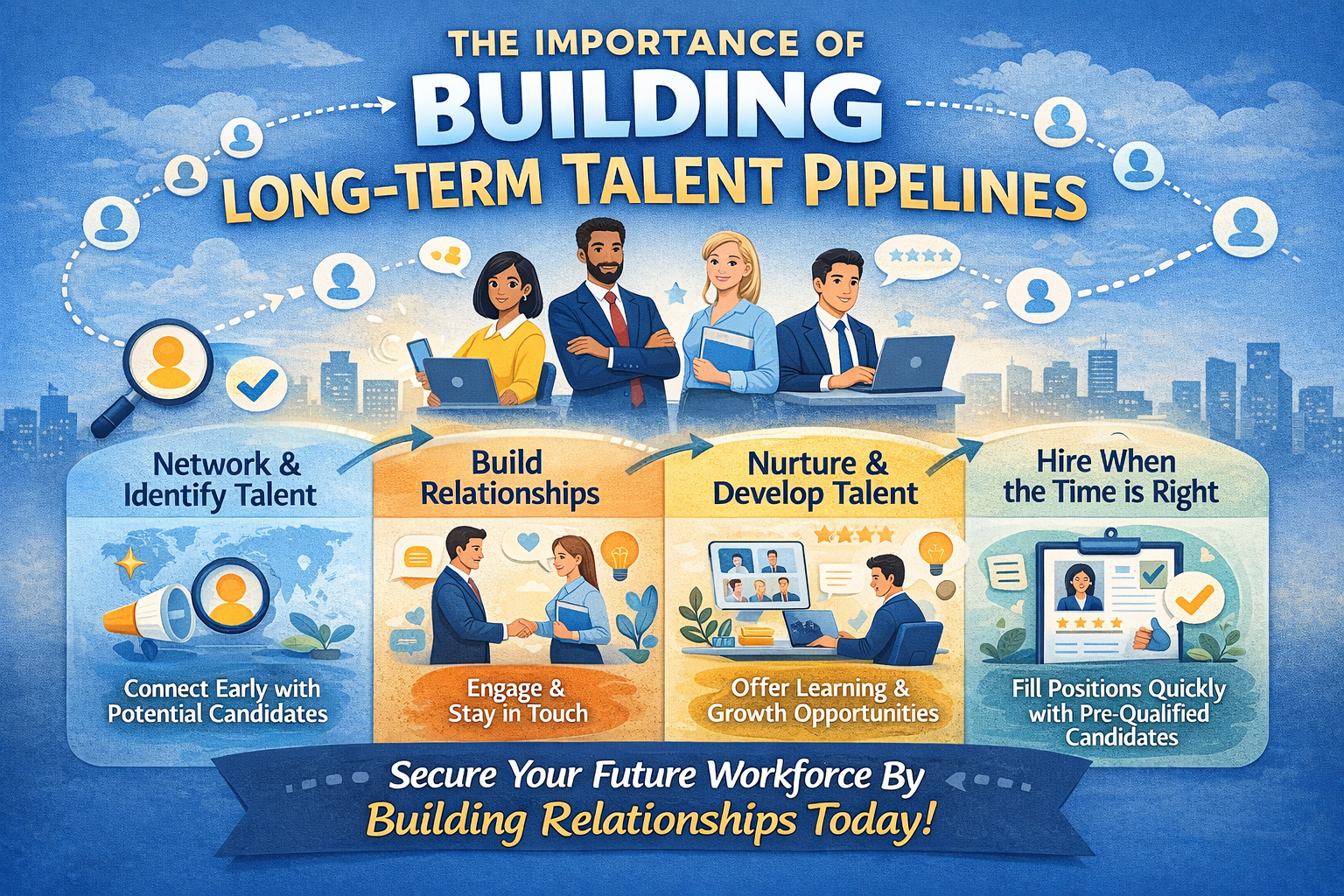
Recruitment is often viewed as a reactive process. A position opens, a job description is posted, applications are reviewed, and eventually a candidate is hired. While this traditional approach may work in some situations, it often creates pressure for recruiters and hiring managers who must fill roles quickly.
In today’s competitive job market, many organisations are shifting toward a more proactive hiring strategy—building long-term talent pipelines.
A talent pipeline is a structured approach to identifying, engaging, and nurturing potential candidates before a specific job opening even exists. Instead of starting recruitment from scratch every time a role becomes available, companies maintain a network of qualified professionals who may be suitable for future opportunities.
From my perspective, organisations that invest in talent pipelines are often better prepared to respond to hiring needs quickly and effectively. Building relationships with potential candidates in advance not only saves time but also helps ensure that companies have access to the right skills when they are needed most.
What Is a Talent Pipeline?
A talent pipeline is a pool of potential candidates who have already been identified as promising fits for future roles within an organisation. These individuals may include:
- Previous job applicants
- Passive candidates who are not actively job hunting
- Interns or graduates from university partnerships
- Professionals met through networking events
- Referrals from employees or industry contacts
Instead of treating recruitment as a one-time event, a talent pipeline allows organisations to maintain ongoing relationships with these individuals.
When a new position becomes available, recruiters can reach out to candidates who already understand the organisation and may be interested in joining the team.
Why Talent Pipelines Are More Important Than Ever
Several factors have made long-term talent pipelines increasingly important in modern recruitment.
Increasing Competition for Skilled Talent
Many industries are experiencing a shortage of skilled professionals. Roles in areas such as technology, engineering, healthcare, and renewable energy often attract intense competition among employers.
Without a pipeline of potential candidates, organisations may struggle to fill these roles quickly. In my observation, companies that build relationships with professionals before vacancies arise often have a significant advantage.
When candidates are already familiar with the organisation, the hiring process can move faster and more smoothly.
Faster Hiring Processes
One of the biggest challenges in recruitment is the time it takes to identify, screen, and interview candidates.
Talent pipelines help reduce time-to-hire by providing recruiters with a ready list of potential candidates. Instead of searching for talent from the beginning, recruiters can immediately reach out to individuals who have already shown interest or demonstrated relevant skills.
This efficiency can be especially valuable when companies need to fill critical roles quickly.
Improved Candidate Quality
When recruiters have more time to engage with potential candidates, they can better understand their skills, career goals, and professional strengths.
This leads to more informed hiring decisions. Instead of relying solely on resumes submitted during a short application window, organisations can evaluate candidates over time.
In my experience reviewing recruitment practices, candidates who are part of long-term pipelines often demonstrate stronger alignment with company culture and job expectations.
Stronger Employer Branding
Maintaining ongoing communication with potential candidates also strengthens employer branding. When professionals receive updates, insights, or invitations from a company, they begin to see the organisation as an active participant in their professional network.
Even candidates who are not immediately looking for a job may develop a positive perception of the company.
Over time, this familiarity can make them more likely to consider future opportunities with that organisation.
Sources for Building Talent Pipelines
Creating a talent pipeline requires a combination of networking, outreach, and relationship-building. Several channels can help organisations identify and connect with potential candidates.
Professional Networking Platforms
Online professional networks play a major role in modern talent sourcing. Platforms such as LinkedIn allow recruiters to connect with professionals across industries and locations.
Recruiters can identify individuals with relevant skills, follow their career updates, and maintain communication even when no immediate role is available.
University and Graduate Partnerships
Collaborating with universities and educational institutions can help organisations build pipelines of early-career talent.
Internship programs, campus recruitment initiatives, and mentoring partnerships allow companies to connect with students before they enter the workforce.
These relationships can create a steady flow of future professionals who are already familiar with the organisation.
Employee Referrals
Employee referrals are often one of the most reliable sources of quality candidates. Current employees frequently know professionals within their networks who may be suitable for future roles.
Encouraging employees to refer talented individuals can help organisations expand their pipeline while maintaining cultural alignment.
Industry Events and Professional Communities
Networking events, conferences, and professional meetups offer valuable opportunities to meet potential candidates.
Participating in industry discussions allows organisations to connect with professionals who are passionate about their field.
In my opinion, these informal connections often lead to strong long-term relationships that benefit both recruiters and candidates.
Strategies for Maintaining a Talent Pipeline
Building a talent pipeline is only the first step. Organisations must also maintain engagement with potential candidates over time.
Regular Communication
Sending occasional updates about company news, industry insights, or upcoming opportunities helps maintain relationships with potential candidates.
This communication should be informative rather than overly promotional.
Talent Communities
Some organisations create online communities where professionals can learn about company culture, events, and career opportunities.
These communities help maintain ongoing engagement with potential candidates who may be interested in future roles.
Candidate Relationship Management
Many companies now use candidate relationship management (CRM) tools to organise talent pipelines and track interactions with potential candidates.
These systems help recruiters maintain records of communication, candidate skills, and potential job matches.
Continuous Networking
Talent pipelines should be constantly expanding. Recruiters benefit from regularly meeting new professionals and adding promising individuals to their network.
This ongoing effort ensures that the pipeline remains active and relevant.
Challenges in Building Talent Pipelines
While talent pipelines offer many advantages, they also require time and commitment.
Maintaining Engagement
Candidates may lose interest if communication is infrequent or irrelevant. Organisations must ensure that outreach remains meaningful and respectful.
Data Management
Managing large networks of potential candidates can be challenging without organised systems. Recruitment technology plays an important role in maintaining accurate records.
Changing Candidate Availability
Candidates’ career goals and circumstances may change over time. Someone who expressed interest in a role a year ago may no longer be available.
This is why pipelines must be continuously refreshed with new connections.
Personal Insight: Why Relationships Matter in Recruitment
From my perspective, one of the most valuable aspects of talent pipelines is the emphasis on relationships rather than transactions.
Traditional recruitment often focuses only on immediate vacancies. Talent pipelines, however, encourage recruiters to build professional relationships over time.
When candidates feel respected and valued—even when there is no immediate job opportunity—they are more likely to consider working with that organisation in the future.
In many ways, recruitment becomes less about filling positions quickly and more about building a community of professionals who trust the organisation.
The Future of Talent Pipelines
As technology and workforce expectations continue to evolve, talent pipelines will likely become an essential component of strategic workforce planning.
Artificial intelligence and data analytics may help recruiters identify promising candidates earlier and maintain stronger engagement with talent networks.
At the same time, the human element of recruitment will remain crucial. Meaningful communication, genuine relationships, and professional respect will continue to shape successful talent pipelines.
Conclusion
Building long-term talent pipelines allows organisations to move from reactive hiring to proactive talent management. By identifying and engaging potential candidates early, companies can reduce hiring delays, improve candidate quality, and strengthen employer branding.
From my observation of recruitment trends, organisations that invest in long-term relationships with professionals are better positioned to adapt to changing workforce demands.
In a competitive talent market, the ability to connect with skilled individuals before a vacancy even exists can provide a powerful advantage.
Ultimately, talent pipelines are not just about preparing for future hiring needs—they are about building lasting professional connections that benefit both organisations and candidates.
About the Author
Ashish Kumar Bhowmick is the founder of AshimHub, a platform dedicated to exploring technology, AI tools, gadgets, and emerging digital trends. With a strong passion for simplifying complex technologies, he creates practical guides, product comparisons, and tutorials that help readers make smarter technology decisions.
Alongside his work in technology content, Ashish has professional experience in talent acquisition and recruitment coaching. He has supported organizations and professionals in improving hiring strategies, building stronger recruitment processes, and developing career growth pathways in competitive job markets.
Through AshimHub, Ashish combines technology insights with professional expertise, delivering valuable content that empowers both tech enthusiasts and career-focused readers. His mission is to make technology and professional development more accessible, practical, and easy to understand for everyday users.
Connect with him on LinkedIn:
https://www.linkedin.com/in/ashish-bhowmick-42961311/